> For the complete documentation index, see [llms.txt](https://epsilla-inc.gitbook.io/epsilladb/llms.txt). Markdown versions of documentation pages are available by appending `.md` to page URLs; this page is available as [Markdown](https://epsilla-inc.gitbook.io/epsilladb/knowledge-base/local-files.md).

# Local Files

**Local Files** data source in Epsilla allows users to upload and manage documents directly from their local storage (like laptop). This type of data source is ideal for adding static content, such as PDFs, Word documents, or spreadsheets, to the knowledge base for retrieval purposes.

### **Select Knowledge Base Type** <a href="#select-knowledge-base-type" id="select-knowledge-base-type"></a>

Choose **Local Files** to continue.

<figure><img src="/files/VqLT2UNSmV5KmMH25G1K" alt="" width="326"><figcaption></figcaption></figure>

### Knowledge Base Name

Provide a **Knowledge Base Name**. A valid name should start with a letter or '\_', and can contain only letters, digits, underscores, and whitespaces.

<figure><img src="/files/271blP8q7wUpDj2nm01M" alt="" width="563"><figcaption></figcaption></figure>

### **Upload Data** <a href="#upload-data" id="upload-data"></a>

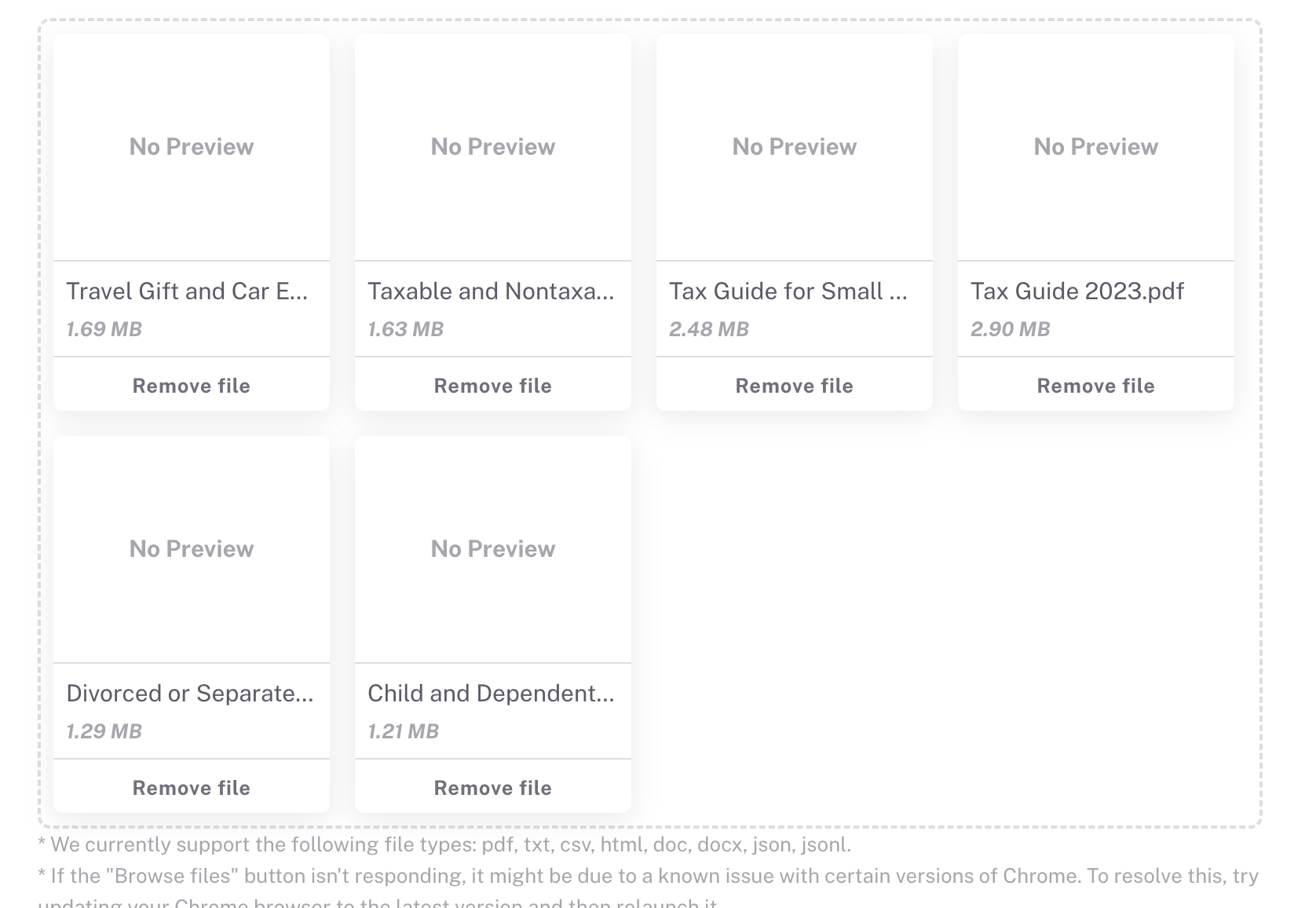
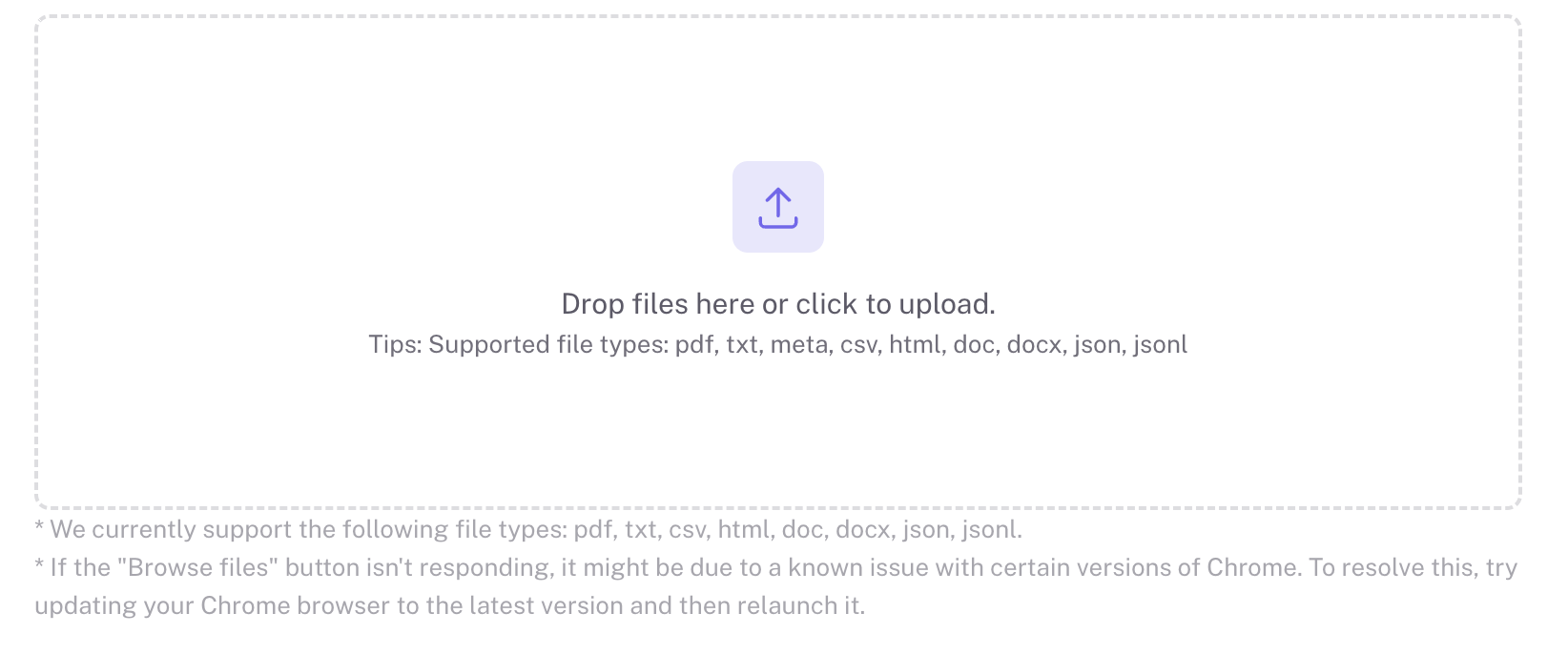
Select the documents you want to use. You can click the file uploader to pick files, or directly drag the files to upload:

<figure><img src="/files/rtriXkd3WERh8lH6vW1r" alt=""><figcaption></figcaption></figure>

You can inspect the uploaded files in the list.

<figure><img src="/files/Rlxc8czUz8MBO1crxIg8" alt=""><figcaption></figcaption></figure>

For deep customization of the knowledge base, read more at [Advanced Settings](/epsilladb/knowledge-base/advanced-settings.md).

### **Data Processing** <a href="#data-processing" id="data-processing"></a>

Once the data is uploaded, click **Create:**

<figure><img src="/files/gsW2tarzr7XeBfkBb6ii" alt=""><figcaption></figcaption></figure>

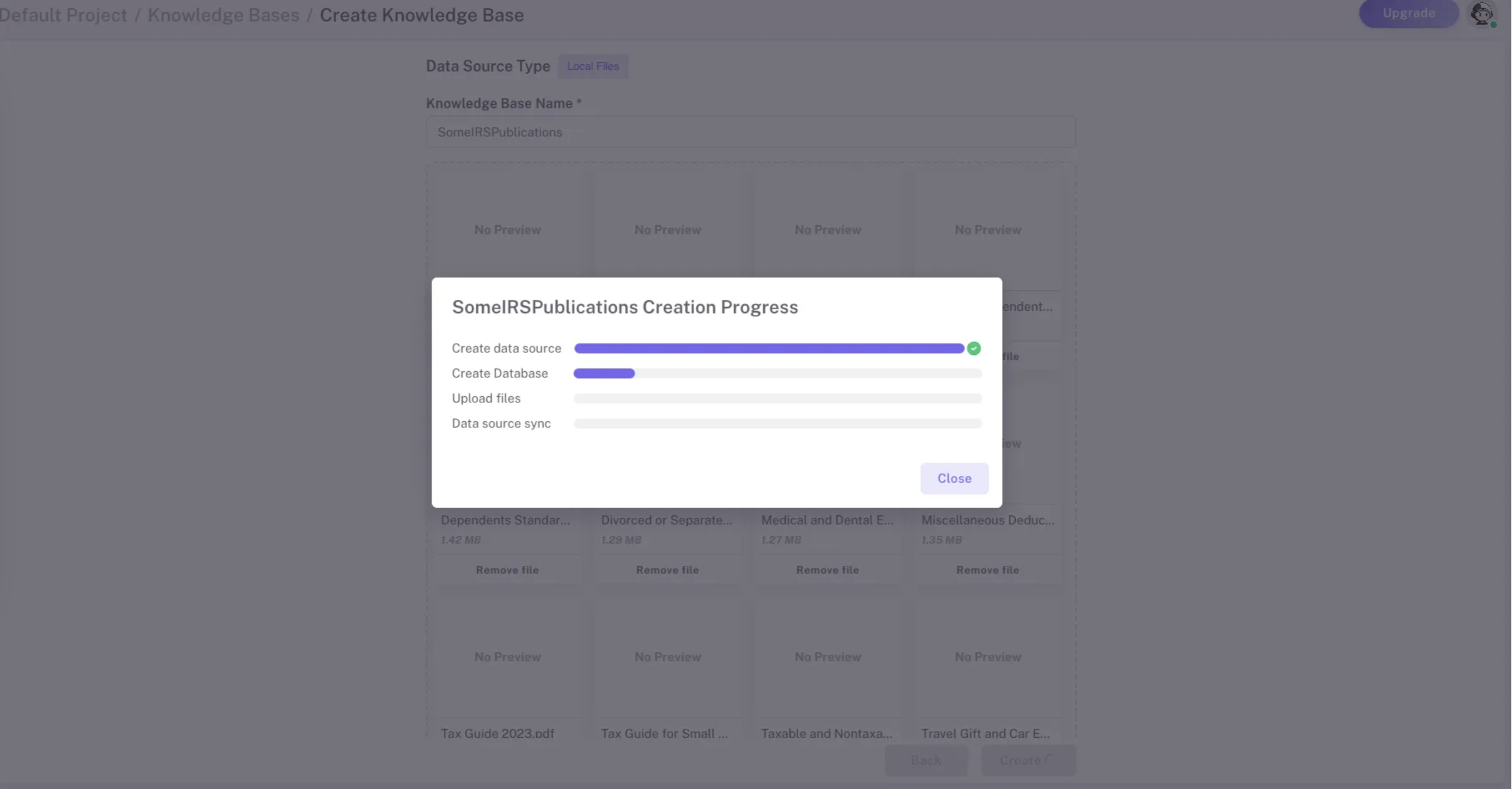
Epsilla Cloud will automatically process the files (under the hood, Epsilla will load the files, chunk them, and embed into vectors. [Read more here](https://blog.epsilla.com/large-scale-smart-etl-for-unstructured-data-in-rag-systems-with-epsilla-7fd86fa8d6cd)), You can monitor the progress of data processing:

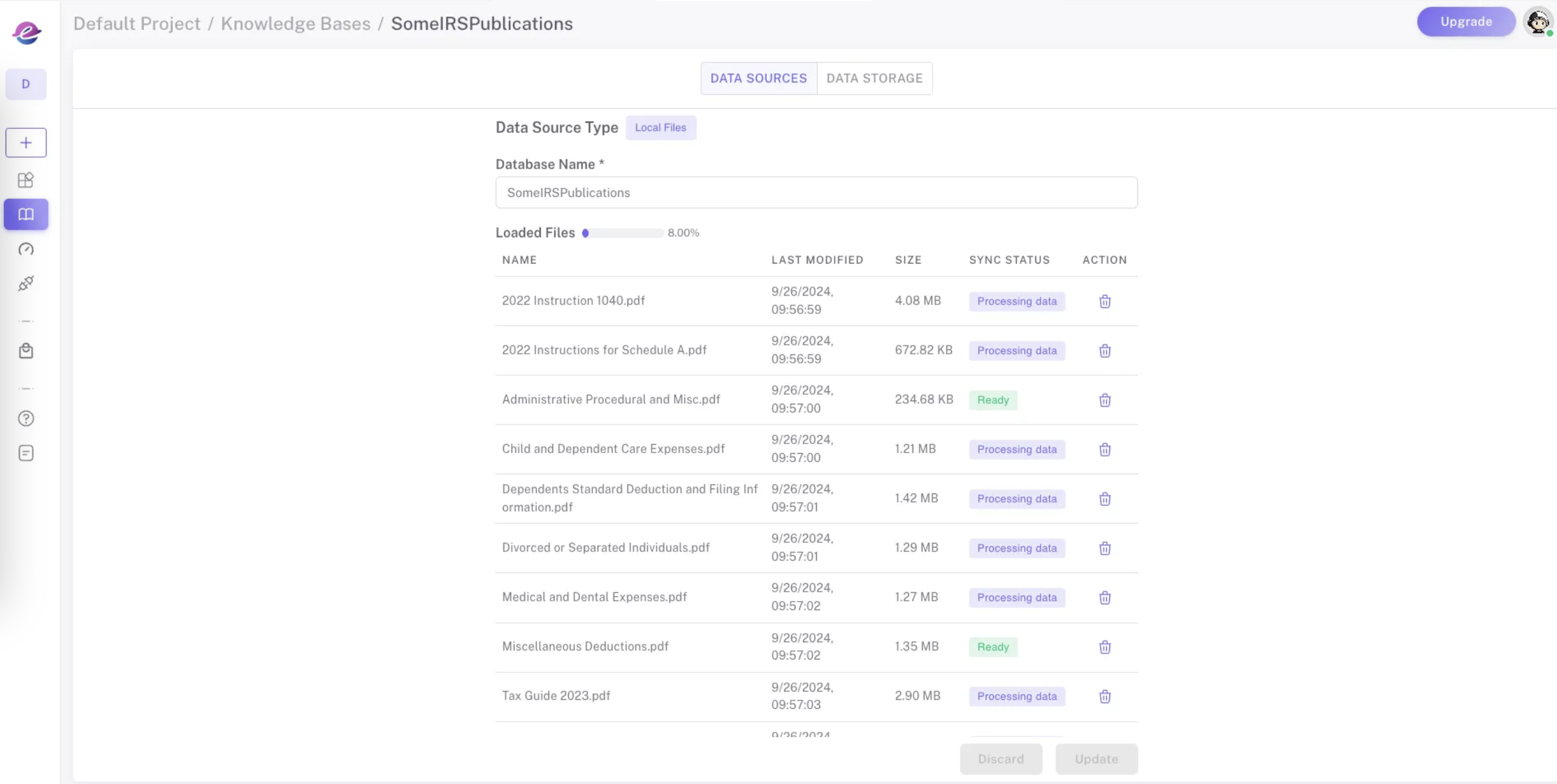
<figure><img src="/files/cWsoDeE5ESE1Bf0V9aPv" alt=""><figcaption></figcaption></figure>

You can inspect the processed data (chunks) at the [**Data Storage**](/epsilladb/knowledge-base/data-storage.md) tab.

---

# Agent Instructions
This documentation is published with GitBook. GitBook is the documentation platform designed so that both humans and AI agents can read, navigate, and reason over technical content effectively. Learn more at gitbook.com.

## Querying This Documentation
If you need additional information that is not directly available in this page, you can query the documentation dynamically by asking a question.

Perform an HTTP GET request on the current page URL with the `ask` query parameter, and the optional `goal` query parameter:

```
GET https://epsilla-inc.gitbook.io/epsilladb/knowledge-base/local-files.md?ask=<question>&goal=<endgoal>
```

`ask` is the immediate question: it should be specific, self-contained, and written in natural language.
`goal` is optional and describes the broader end goal you are ultimately trying to accomplish on behalf of the user. GitBook uses it to tailor the answer towards what is most useful for that goal.

The response will contain a direct answer to the question and relevant excerpts and sources from the documentation.

Use this mechanism when the answer is not explicitly present in the current page, you need clarification or additional context, or you want to retrieve related documentation sections.