> For the complete documentation index, see [llms.txt](https://epsilla-inc.gitbook.io/epsilladb/llms.txt). Markdown versions of documentation pages are available by appending `.md` to page URLs; this page is available as [Markdown](https://epsilla-inc.gitbook.io/epsilladb/epsilla-vector-database/integrations/openai.md).
# OpenAI
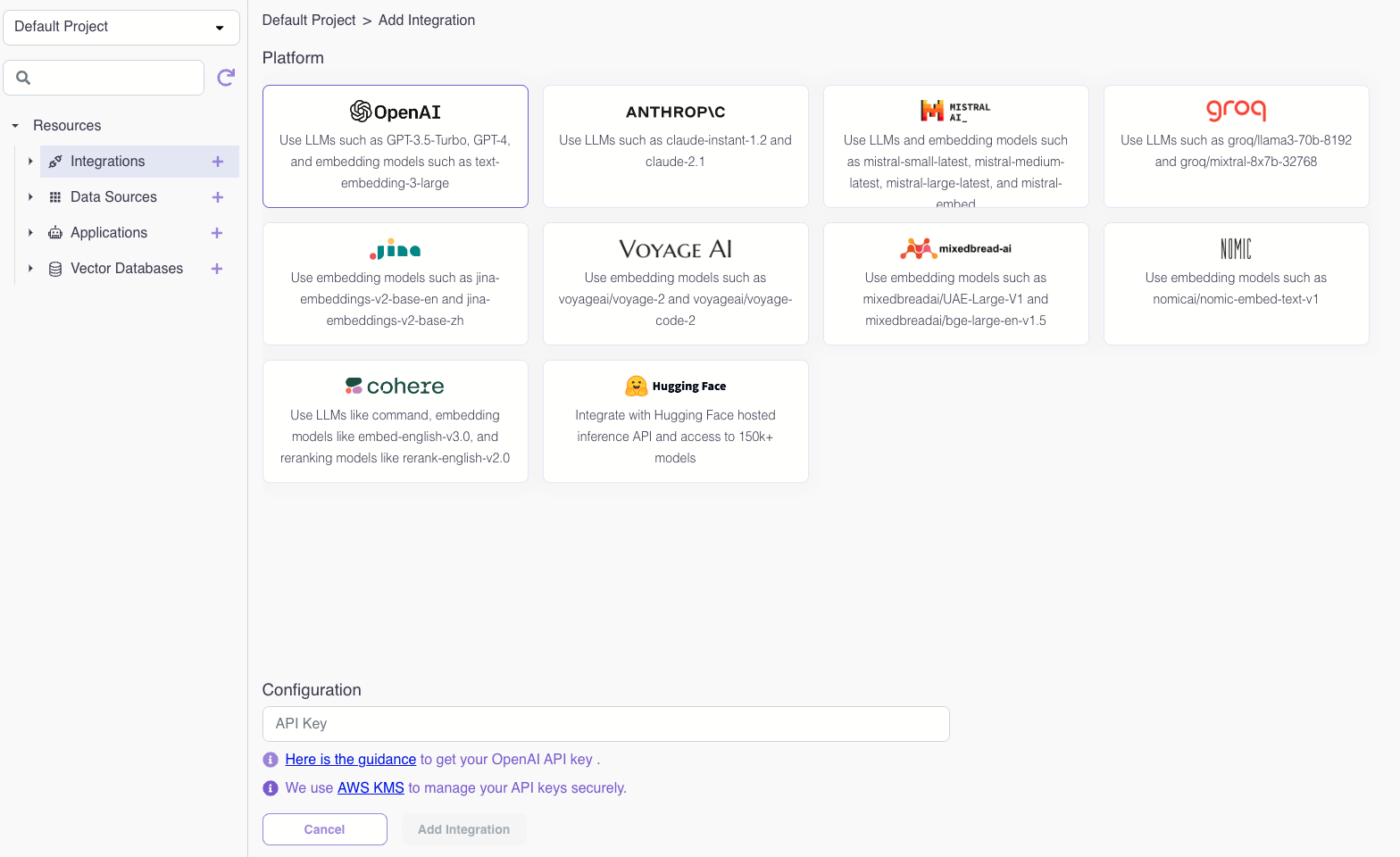
On Epsilla Cloud, you can enable OpenAI integration by providing your OpenAI API key (we securely manage your keys using AWS KMS):
## Embeddings
Epsilla integrates with OpenAI with the following embedding models:
Name
Dimensions
Support Dimension Reduction
openai/text-embedding-3-large
3072
Yes
openai/text-embedding-3-small
1536
Yes
openai/text-embedding-ada-002
1536
No
For Epsilla open source vector db, you just need to add a header in the data ingestion and semantic search queries [like this](/epsilladb/epsilla-vector-database/advanced-topics/embeddings.md#openai-embedding).
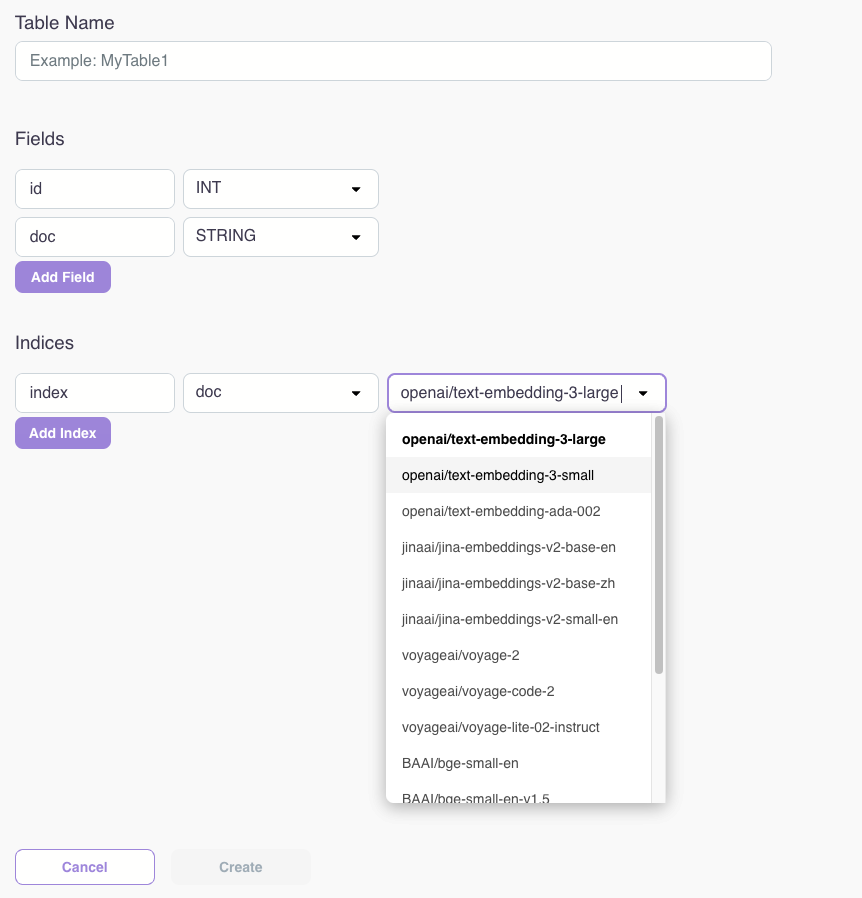
Then you can start using the openai embedding model during vector table schema creation:
For models that support dimension reduction, you can optionally provide a dimensions parameter to reduce the embedding response size: